

Application / Machinery manufacturing
Laser Processing for Machinery Manufacturing
A selection approach for sheet and tube components, organised around the workpiece, processing route and validation evidence.
Application reference · Workpiece-specific validation · No customer result implied
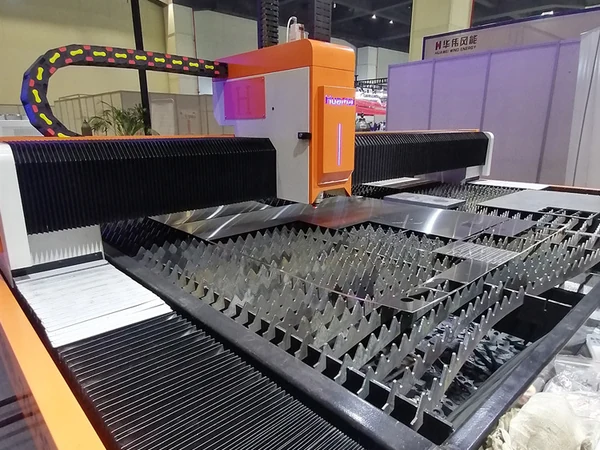
Part families Plates & tubes
Approach Select, configure, validate
Evidence status Application reference
High-mix machinery parts, different processing needs.
The machinery-manufacturing material describes high-mix, low-volume and customised production: changing specifications, frequent drawing changes and mixed sheet/tube components. The task is to match the processing route to the part family.
- Plate components: frames, base plates, flanges, brackets, connectors, guards, gearbox covers, die base plates and fixtures.
- Tube components: structural tubes, booms and frames, hydraulic/pneumatic lines, guardrails, ladders, shaft sleeves and special profiles.
Define the bottleneck before selecting equipment.
Swipe horizontally to read every column.
| Source-described issue | Question for your workshop |
|---|---|
| Changing parts and small batches | Which drawings, batch sizes and changeovers dominate the workload? |
| Tooling and setup | Which existing operations require dedicated tooling or repeated setup? |
| Scattered operations | Where do blanking, hole making, bending and welding create handling or work in progress? |
| Complex contours and hole patterns | Which features need additional routing or inspection today? |
| Cut face and assembly fit | What dimensional and surface criteria must downstream processes accept? |
| Handling and material use | What sheet sizes, tube lengths, supports and nesting constraints apply? |
The older draft includes generic time, scrap and efficiency figures. They are not measured HuaMai project results and are not used as promises here.
Material, geometry & acceptance boundaries.
The application draft discusses carbon steel, stainless steel, galvanised sheet/tube, aluminium and alloys, brass and copper. These are discussion inputs, not a guarantee that every listed material or profile is compatible with every machine.
Specify material grade, sheet dimensions or tube section, thickness/wall thickness, cut features, tolerances and handling conditions. Actual performance depends on the selected model, power, assist gas, cutting process and sample verification.
Check the actual configuration.
The application document explicitly states that configuration and process-monitoring functions differ by machine, and that actual results depend on material, thickness, assist gas, process and sample cutting verification. The older 3015DP references must not be transferred to the HM3015D model.
Choose a route around the part family.
Swipe horizontally to read every column.
| Part / process need | Equipment route to discuss | Boundary |
|---|---|---|
| Flat plates, brackets, covers and hole patterns | Tabletop sheet laser cutting | Match work area, material and required features to a verified configuration. |
| Structural tubes, frames and tubular components | Horizontal tube laser cutting | Review section, diameter, length, weight, clamping and support. |
| Combined plate-and-tube workload | Separate sheet and tube processing routes | This page does not imply a single machine performs every operation. |
| Bevels, tab-and-slot joints or special profiles | Review the exact process feature with the drawing | Capability is configuration-dependent; do not assume it on HM3015D. |
The source discusses imported drawings, nesting and combining contour cutting with holes and slots. Whether these reduce handling or tooling for your order mix should be assessed using your own route and sample evidence.
Why separate sheet and tube selection?
The source organises plate components around a flat-bed sheet cutter and tube components around a horizontal tube cutter. Selection should therefore distinguish sheet size and contour requirements from tube section, clamping and support requirements. The documented process-integration ideas remain subjects for workpiece-specific testing, not guaranteed savings.
A proposed discussion-to-validation sequence.
Describe the order mix
Share drawings, materials, batch patterns and downstream requirements.
Review configuration
Compare sheet or tube processing requirements with model-specific data.
Agree sample validation
Discuss representative parts, process conditions and acceptance evidence.
Discuss delivery support
Clarify installation guidance, training, maintenance and the contracted scope.
This is a proposed consultation sequence. Sample cost, schedule, delivery terms and support responsibilities require agreement.
Evidence and limitations.
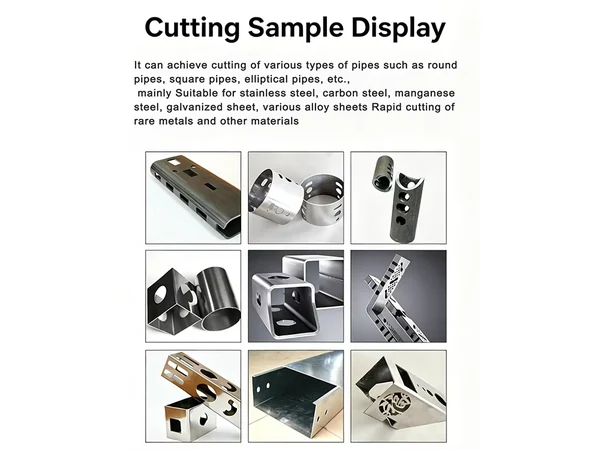
The photographs illustrate supplied processing and sample material. They are not presented as an identified customer project or a measured before-and-after result.
No verified client name, project location/date, acceptance criteria or result dataset is available for a machinery case page. Older figures for changeover, material savings, ±0.03 mm accuracy, 30-day delivery and 24-month warranty are excluded. A cited third-party historical CO₂-laser case is not a HuaMai result.
No measured outcome is implied.
A customer-identified project, agreed baseline, inspection results and measured improvement data have not been supplied. No quantified productivity, scrap, ROI, changeover or quality outcome is claimed by this application reference.
Bring a representative component.
Start with a drawing and describe the current process, material, expected part quality and handling constraints. Use sample information in this review form.